
The Obsessive-Compulsive Brain: Serotonin Pathways and Neural Circuits
### Short English Version
The Obsessive-Compulsive Brain: Serotonin Pathways and Neural Circuits
Obsessive-Compulsive Disorder (OCD) is characterized by persistent intrusive thoughts (obsessions) and repetitive behaviors or mental acts (compulsions). Modern classifications place OCD within Obsessive-Compulsive and Related Disorders (OCRDs), alongside conditions such as body dysmorphic disorder, hoarding disorder, trichotillomania, and excoriation disorder.
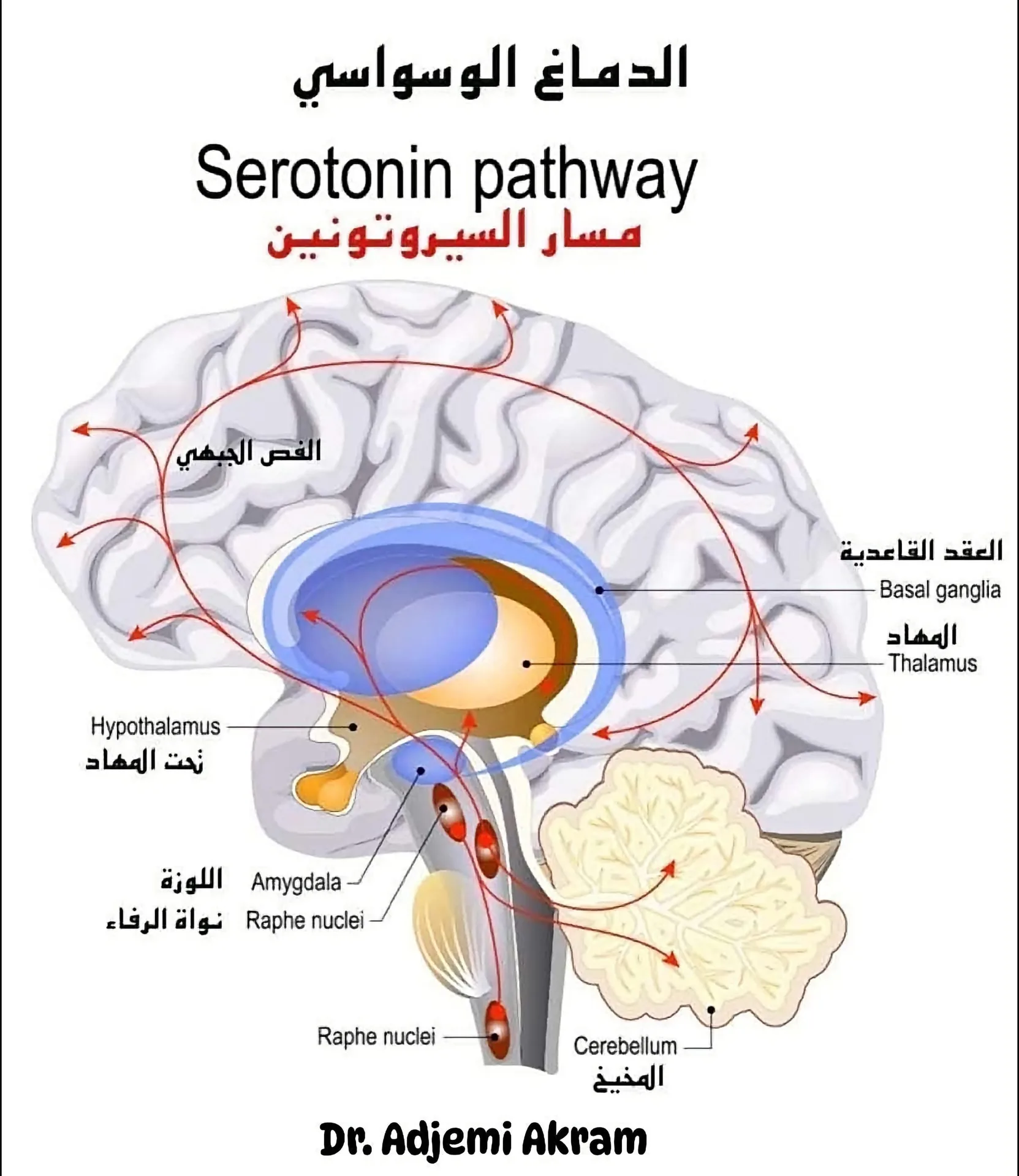
Current neuroscience suggests that OCD cannot be explained by serotonin alone. Research points to dysfunction within cortico-striato-thalamo-cortical (CSTC) circuits, particularly networks involving the orbitofrontal cortex, anterior cingulate cortex, striatum, and thalamus. These circuits contribute to cognitive flexibility, error monitoring, habit formation, threat processing, and behavioral inhibition.
People with OCD may experience difficulty disengaging from intrusive thoughts and repetitive behaviors even when they recognize that these responses are unnecessary. Altered fear extinction and safety learning may also contribute to persistent feelings of threat.
Treatment typically includes Cognitive Behavioral Therapy (CBT), particularly Exposure and Response Prevention (ERP), and medications such as Selective Serotonin Reuptake Inhibitors (SSRIs). Clomipramine may also be effective but generally has a greater side-effect burden. Treatment-resistant cases require specialist assessment, and selected severe cases may be considered for advanced interventions such as deep brain stimulation.
Importantly, OCD should not be described simply as a “chemical imbalance” or serotonin deficiency. It is better understood as a complex disorder involving interactions among brain circuits, neurotransmitter systems, learning processes, genetics, and environmental factors.
*